Mahindra BE 6 SPORTEQ BaaS vs Full Battery: What Will It Really Cost to Own?
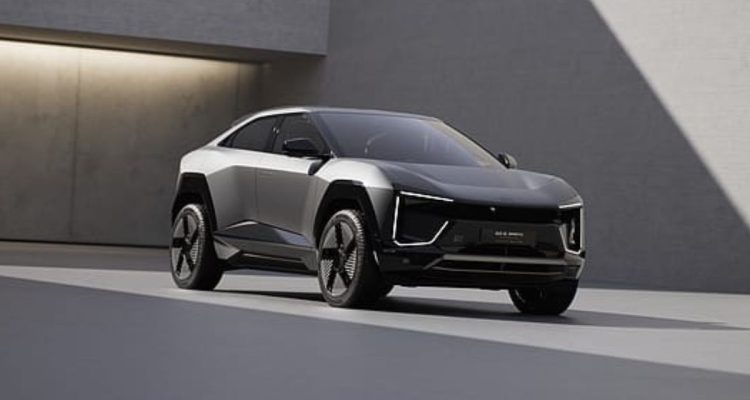
The new Mahindra BE 6 SPORTEQ has an interesting pricing strategy. Its headline price starts at just Rs 11.45 lakh, which makes it look much cheaper than most premium electric SUVs in India. But there is an important catch. This is the price of the vehicle under Mahindra’s Battery-as-a-Service (BaaS) model, and the battery is not included in that upfront price. Instead, customers pay Rs 3.75 per km for the battery under the BaaS model.
If you want to own the battery outright, the BE 6 SPORTEQ starts at Rs 19.45 lakh for the SPORTEQ One with the 59kWh battery. That means there is an Rs 8 lakh difference between the two pricing models before considering charging, insurance, financing and other ownership costs.
So, which option actually makes more sense?
The answer is not the same for everyone. Your monthly running, how long you plan to keep the car and your preference for lower upfront cost versus long-term ownership can significantly change the calculation.
First, understand what BaaS actually means
Battery-as-a-Service separates the cost of the battery from the cost of the car. With the BE 6 SPORTEQ, you can buy the SPORTEQ One or SPORTEQ Two with the 59kWh battery under the BaaS model. The upfront prices are Rs 11.45 lakh and Rs 12.95 lakh, respectively. The battery usage charge is Rs 3.75 per km.
I have already written a dedicated article explaining Mahindra BE6 BaaS. The article answers all questions you may have in your mind about the Baas Mode.
BE 6 SPORTEQ BaaS vs battery-inclusive price
Here is the basic comparison for the two variants that are available with BaaS:
| Variant | Battery | BaaS price | Battery-inclusive price | Difference |
|---|---|---|---|---|
| SPORTEQ One | 59kWh | Rs 11.45 lakh + Rs 3.75/km | Rs 19.45 lakh | Rs 8 lakh |
| SPORTEQ Two | 59kWh | Rs 12.95 lakh + Rs 3.75/km | Rs 20.95 lakh | Rs 8 lakh |
All prices are ex-showroom.
The rest of the BE 6 SPORTEQ range does not currently get the same BaaS pricing structure. The SPORTEQ Three, Three Plus, Four and Launch Edition are offered with the battery included in their listed prices.
How much will you pay for the battery every month?
This is where your driving pattern becomes important.
At Rs 3.75 per km, the BaaS payment works out to:
| Monthly driving | BaaS cost per month | BaaS cost per year |
|---|---|---|
| 500 km | Rs 1,875 | Rs 22,500 |
| 1,000 km | Rs 3,750 | Rs 45,000 |
| 1,500 km | Rs 5,625 | Rs 67,500 |
| 2,000 km | Rs 7,500 | Rs 90,000 |
| 2,500 km | Rs 9,375 | Rs 1.125 lakh |
| 3,000 km | Rs 11,250 | Rs 1.35 lakh |
| 4,000 km | Rs 15,000 | Rs 1.80 lakh |
These numbers are simply based on the announced Rs 3.75 per km rate. Your actual BaaS bill will depend on the final agreement and its applicable terms.
This is also why someone driving 500 km a month and someone driving 3,000 km a month should not make the same BaaS decision.
The Rs 8 lakh difference looks attractive, but there is a catch
Let’s take the SPORTEQ One as an example.
The BaaS version costs Rs 11.45 lakh upfront, while the battery-inclusive version costs Rs 19.45 lakh.
So you save Rs 8 lakh upfront.
At Rs 3.75 per km, you would need to pay:
Rs 8,00,000 ÷ Rs 3.75 = about 2.13 lakh km
This is the point where the cumulative BaaS payments alone equal the Rs 8 lakh upfront difference.
At 1,000 km per month, that would take about 17.8 years.
At 2,000 km per month, it would take about 8.9 years.
At 3,000 km per month, it would take about 5.9 years.
But this is only a simple mathematical comparison. It does not mean BaaS becomes free after that point or that buying the battery is automatically better. The calculation ignores financing costs, the time value of money, battery ownership, resale value, contract duration, taxes and any eventual battery settlement or purchase terms.
It is useful mainly to show why high-mileage users need to look more carefully at BaaS.
What about the minimum monthly payment?
This is one area where buyers should be careful. There are current discussions among prospective BE 6 SPORTEQ buyers suggesting that the BaaS plan may have a minimum monthly distance commitment of around 1,800 km, which would translate to Rs 6,750 per month at Rs 3.75 per km.
However, this minimum is not clearly stated in Mahindra’s public launch announcement that we could verify. Therefore, buyers should confirm the minimum monthly commitment, billing method and treatment of unused kilometres directly with Mahindra or the BaaS financing partner before booking the vehicle.
This is particularly important for people who drive only 500-1,000 km a month. If a minimum monthly charge applies, simply multiplying your actual kilometres by Rs 3.75 will give you an unrealistically low estimate.
BaaS does not cover charging
This is another common misunderstanding. Suppose your BE 6 consumes around 0.20 kWh per km in real-world driving. At a home electricity cost of Rs 8 per unit, charging would cost around:
0.20 × Rs 8 = Rs 1.60 per km
Your effective running cost with BaaS would then be approximately:
Rs 3.75 + Rs 1.60 = Rs 5.35 per km
This is only an example. Actual efficiency will vary with driving style, speed, temperature, air conditioning, tyre pressure, traffic and charging losses. Public fast charging can also cost considerably more than home charging. So buyers should calculate BaaS and electricity separately.
What does a BE 6 cost to run without BaaS?
With the battery purchased upfront, you don’t have the Rs 3.75 per km battery usage charge. Your main running cost becomes electricity. For example, if the car consumes 0.20 kWh per km and your effective home charging cost is Rs 8 per kWh, 1,000 km of driving would require roughly 200 kWh of electricity. That would cost about Rs 1,600. At 2,000 km, the electricity cost would be around Rs 3,200.
Again, these are examples rather than official Mahindra running-cost figures.
This is one of the major advantages of owning the battery outright. Once you have paid for the battery, your distance-based running cost is largely limited to electricity and normal vehicle running expenses.
What happens to the Rs 8 lakh you save initially?
This is where the BaaS decision gets more interesting. If you choose BaaS, you keep roughly Rs 8 lakh in your pocket initially. That money could be used for a down payment, invested, or simply kept as liquidity.
For example, someone who does not want to put an additional Rs 8 lakh into a depreciating asset may prefer BaaS even if the long-term mathematical cost is higher.
On the other hand, someone who has the money available and plans to keep the BE 6 for many years may prefer buying the battery outright because it removes the per-kilometre battery payment.
This makes BaaS more of a cash-flow decision than a simple “cheap or expensive” decision.
What happens if you finance the car?
This is another important part of the calculation. With the battery-inclusive version, you are financing a higher vehicle price. However, with BaaS, the initial vehicle cost is lower, but the battery service payment continues separately. The exact difference will depend on the loan amount, interest rate, tenure and down payment.
For example, if you finance the additional Rs 8 lakh required for the battery-inclusive version, you will also pay interest on that amount.
That means comparing Rs 8 lakh directly with future BaaS payments is not enough.
A buyer should compare:
Car EMI + BaaS payment + electricity
against:
Higher car EMI + electricity
The calculation becomes even more important if you are taking a long-term loan.
BaaS also does not remove normal ownership costs
Whether you choose BaaS or buy the battery outright, you still have to pay for the normal costs of owning a car. These include insurance, registration and taxes, servicing, tyres, brakes, alignment and balancing, accessories, parking, tolls and charging equipment. Mahindra’s service documentation includes scheduled inspections and maintenance for components such as the battery system, coolant, brake fluid, brakes, drive shaft components and tyres.
The cost of maintaining an EV can be lower than an equivalent petrol or diesel vehicle in some areas because there is no conventional engine, clutch or exhaust system. But an EV is not a maintenance-free vehicle.
Tyres can also be an important expense on a powerful and relatively heavy electric SUV.
Don’t forget the charger
The BE 6’s advertised ex-showroom price does not include the wall charger and its installation. Mahindra previously stated that customers would be billed separately for the available 7.3kW or 11.2kW charger options. This means the actual amount you need to spend at the time of purchase can be higher than the advertised ex-showroom figure.
You should therefore ask the dealer for an on-road quotation that separately lists:
Vehicle price + registration + insurance + charger + charger installation + accessories + any BaaS-related charges.
Who should choose BaaS?
BaaS can make sense for buyers who want to reduce their upfront spending. It can also be useful for someone who wants to keep more cash available instead of putting another Rs 8 lakh into the vehicle. It may particularly appeal to buyers who change cars relatively frequently, although the resale and transfer rules need to be confirmed first.
But low running does not automatically mean BaaS is better. If there is a minimum monthly payment, a person driving very little could still end up paying more than expected.
Who should buy the battery outright?
Buying the battery upfront makes more sense for buyers who want simple ownership. There is no separate per-kilometre battery charge, and the battery remains part of the vehicle. It can also be more attractive for people who drive a lot. At 2,000, 3,000 or 4,000 km per month, the Rs 3.75 per km payment can become a significant recurring expense. It is also easier to understand the long-term ownership cost because the biggest battery-related expense has already been paid.
So, is Mahindra’s BaaS actually cheaper?
It can be, but not for everyone.
The BaaS model makes the BE 6 SPORTEQ much easier to buy because it removes Rs 8 lakh from the upfront price of the two eligible variants. But that saving is exchanged for a recurring battery payment based on kilometres driven.
For a buyer who values lower upfront cost and has moderate running, BaaS can be an attractive way to enter the BE 6. For a high-mileage owner planning to keep the car for many years, buying the battery upfront deserves a much closer look.
And for someone planning to sell the car after a few years, the most important question may not be the monthly BaaS payment at all. It may be how easily the battery agreement can be transferred or settled when the car changes hands.
Mahindra has made the BE 6 SPORTEQ’s headline price much more attractive with BaaS. But buyers should look beyond the Rs 11.45 lakh figure and calculate the complete cost of ownership before booking.
The Rs 11.45 lakh price is only the starting point. The real cost depends on how much you drive, how you charge, how long you keep the car and, most importantly, the exact terms of the battery service agreement.
More Related Articles

Mahindra XUV 3XO ZNG Launched in India at Rs 9.99 Lakh: Check Price, Features and Engine Details

Mahindra Thar OG vs Previous Thar: 10 Things That Have Changed

Deepanker Verma
Deeepanker Verma is a tech blogger.